SUV Towing Accessories: Vehicle Rating, Receiver and Wiring
Equipment selected by dimensions and mounting
These are not model-specific fitment recommendations. Match the measurements, attachment hardware and operating limits to your vehicle.
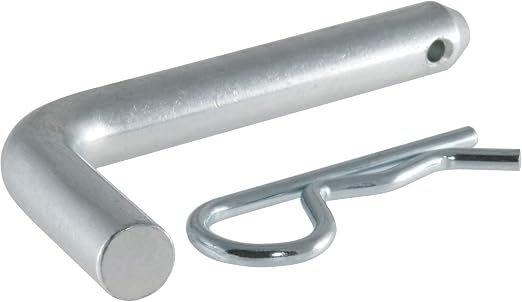
CURT 21580 hitch pin and clip — 5/8-inch pin
For an appropriate 2- or 2-1/2-inch receiver and accessory with a 5/8-inch pin hole. Check usable pin length, clearance and the accessory instructions. This pin does not add a tow package or increase vehicle towing capacity.
Retailer listing checked 2026-10-04 · manufacturer fitment confirmation is separate
View selected product on Amazon ↗SUV towing accessories should be selected from the vehicle outward. A hitch, ball mount, cargo carrier or wiring harness cannot raise the SUV’s own towing, axle, payload or tongue-weight limits. Begin with the delivered vehicle’s owner documentation, certification labels and installed towing package, then match every accessory to the trailer or carrier you actually intend to use.
Start with the vehicle ratings, not the accessory rating
Record the SUV’s maximum trailer rating, payload allowance, rear-axle limits and any stated tongue-weight limit. Then include passengers, luggage, hitch hardware and cargo-carrier weight in the real load calculation. A receiver or ball mount with a high advertised rating does not increase the weakest rating elsewhere in the system.
Identify the complete hitch setup
Record receiver opening size, receiver class, hitch height, coupler size and the rise or drop needed to keep the loaded trailer level. Check whether an adapter reduces the usable rating. If the SUV uses a factory removable receiver or power-folding hitch, confirm that the accessory maker specifically supports that hardware rather than assuming any square receiver behaves the same.
Wiring and trailer brakes are separate decisions
A four-pin lighting connection and a seven-pin towing connector serve different equipment needs. Match the actual trailer plug and determine whether the trailer uses electric brakes, a brake controller, auxiliary power or reverse circuits. Do not improvise by cutting into vehicle wiring when a vehicle-specific harness is available. Follow the SUV and trailer manufacturer’s wiring instructions.
Powertrain and body configuration can change the application
Ask for the exact year, body, trim and powertrain when buying a hitch or wiring kit. Hybrid, plug-in hybrid and battery-electric versions can have different underbody packaging, cooling requirements or manufacturer towing limits. A longer-wheelbase or three-row body may also use a different hitch part number from a visually similar two-row SUV.
Hitch-mounted cargo carriers need their own load check
A cargo basket or bike rack applies weight behind the rear axle. Count the carrier itself plus the cargo toward the applicable tongue or vertical-load limit. Check liftgate movement, departure angle, exhaust clearance, rear-camera view, parking sensors, license-plate visibility and tail-lamp visibility before travel.
A tow hitch is not automatically a recovery point
Do not use towing hardware for vehicle recovery unless the vehicle and hardware manufacturer explicitly approves that use. Recovery loads can be highly dynamic and may exceed what a towing component was designed to handle. Use the vehicle’s documented recovery points and procedures instead.
SUV towing accessory checklist
- Verify the exact vehicle’s tow, payload and axle limits.
- Match receiver size, ball size, coupler and required rise/drop.
- Confirm four-pin versus seven-pin wiring and any brake-controller requirement.
- Include hitch, adapter and carrier weight in the load calculation.
- Check liftgate, bumper, camera, sensor and ground-clearance interference.
- Use the trailer and vehicle manufacturer’s loading and braking instructions.
Compare SUV cargo organizers when internal storage is enough, review roof cargo carriers for lighter external loads, and use the SUV vehicle directory for model-specific accessory research.
Select an SUV from the vehicle directory to open its accessory workspace.